Entry 19 · Colour
White balance is a choice
Neutral is a decision about which light source you are calling white.
- Entry
- 19
- Section
- 04 Colour
- By
- Marek Sowa
- Read
- 2 min

The number under the word
"White" is not a physical property of light. It is an assignment — a decision that some particular spectral power distribution will be treated as the reference from which everything else is measured. Change the reference, and the same scene looks warm, cool, or correct, depending on which version you show a viewer who wasn't there.
The mechanism is simple. A camera sensor records three broad channels: red, green, blue. Daylight at roughly 5,500 K drives those channels in a particular ratio; tungsten at 3,200 K drives them in a different one. White balance is a set of three multipliers — one per channel — that brings the recorded ratio of a neutral surface back to equal. If the multipliers are chosen to match the actual illuminant, a white card reads white. If they are chosen for a different illuminant, the same card reads orange or blue. Neither outcome is wrong in any physical sense; they are just different claims about which light source we are calling white.
This is why white balance sits entirely outside the renderer. The renderer works in scene-referred, linear values whose energy relationships are real and fixed. White balance is an opinion applied afterward, in the display transform or in grading, about which neutral you want to anchor the image to. You can shoot the same HDRI, light the same set, and deliver two perfectly valid versions: one balanced to the outdoor fill, one balanced to the practicals inside.
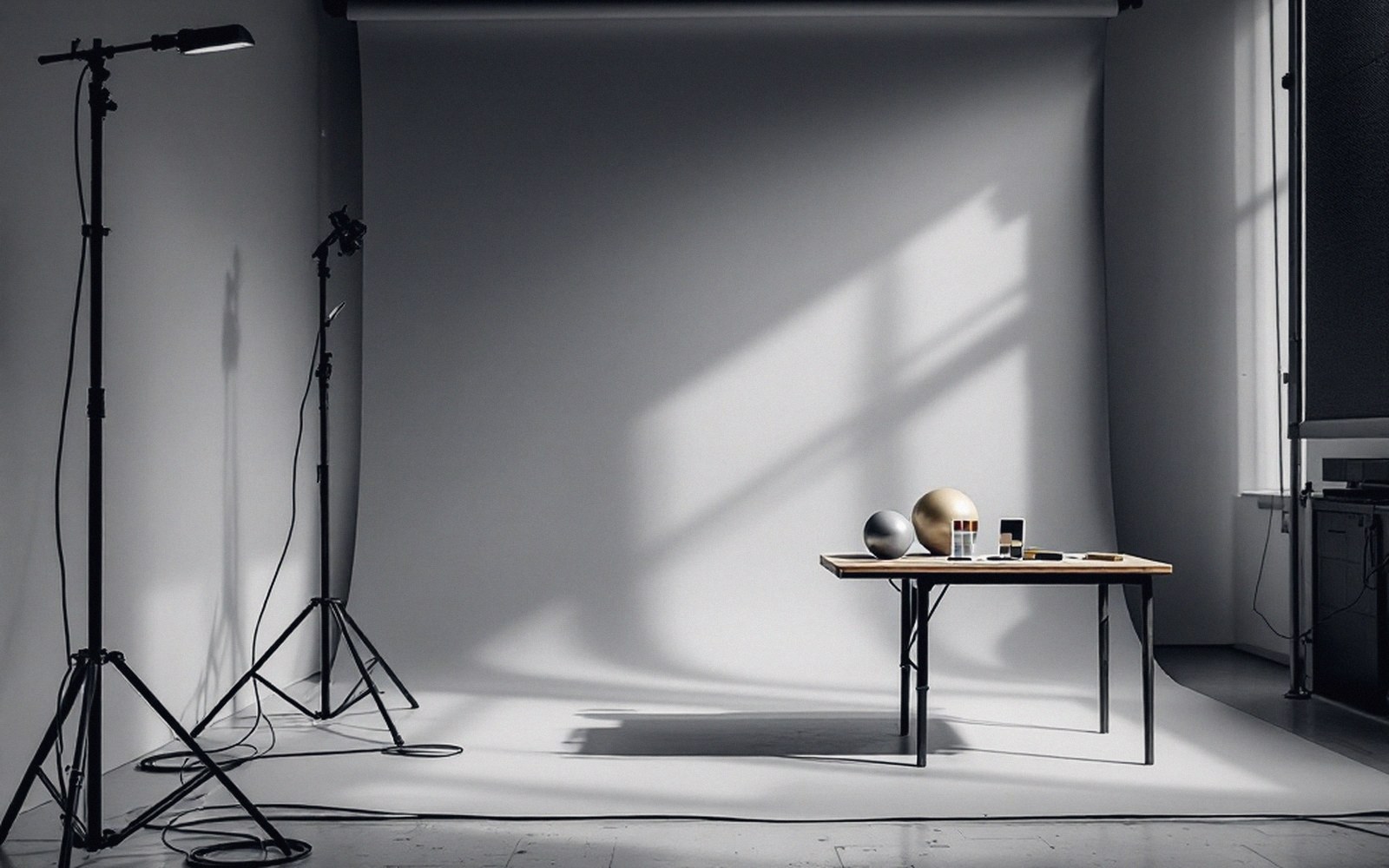
The trouble arrives when that choice is made unconsciously. Auto white balance on a camera shifts from frame to frame as the scene changes; mixed lighting — a window and a fluorescent strip — means no single set of multipliers can make both sources simultaneously neutral. In those situations, calling one light white is also implicitly calling the other one coloured, and the grade has to decide which cast is a problem and which one is character.
The neutral patch on a colour chart is the physical anchor that makes this decision reversible in post: measure what the camera recorded on a known neutral surface under the actual illuminant, invert it, and you have the correct multipliers. What you do with them is still a choice. The reference just makes sure it is a deliberate one.
More in Colour
Every entry in this section is listed on the Colour page, and all twenty-four sit in the full register.