Entry 18 · Colour
Linear and display
The colour pipeline has two distinct jobs: arithmetic and appearance. Confusing the space where each happens is how renders go wrong before a single render is wrong.
- Entry
- 18
- Section
- 04 Colour
- By
- Tom Beddoe
- Read
- 2 min
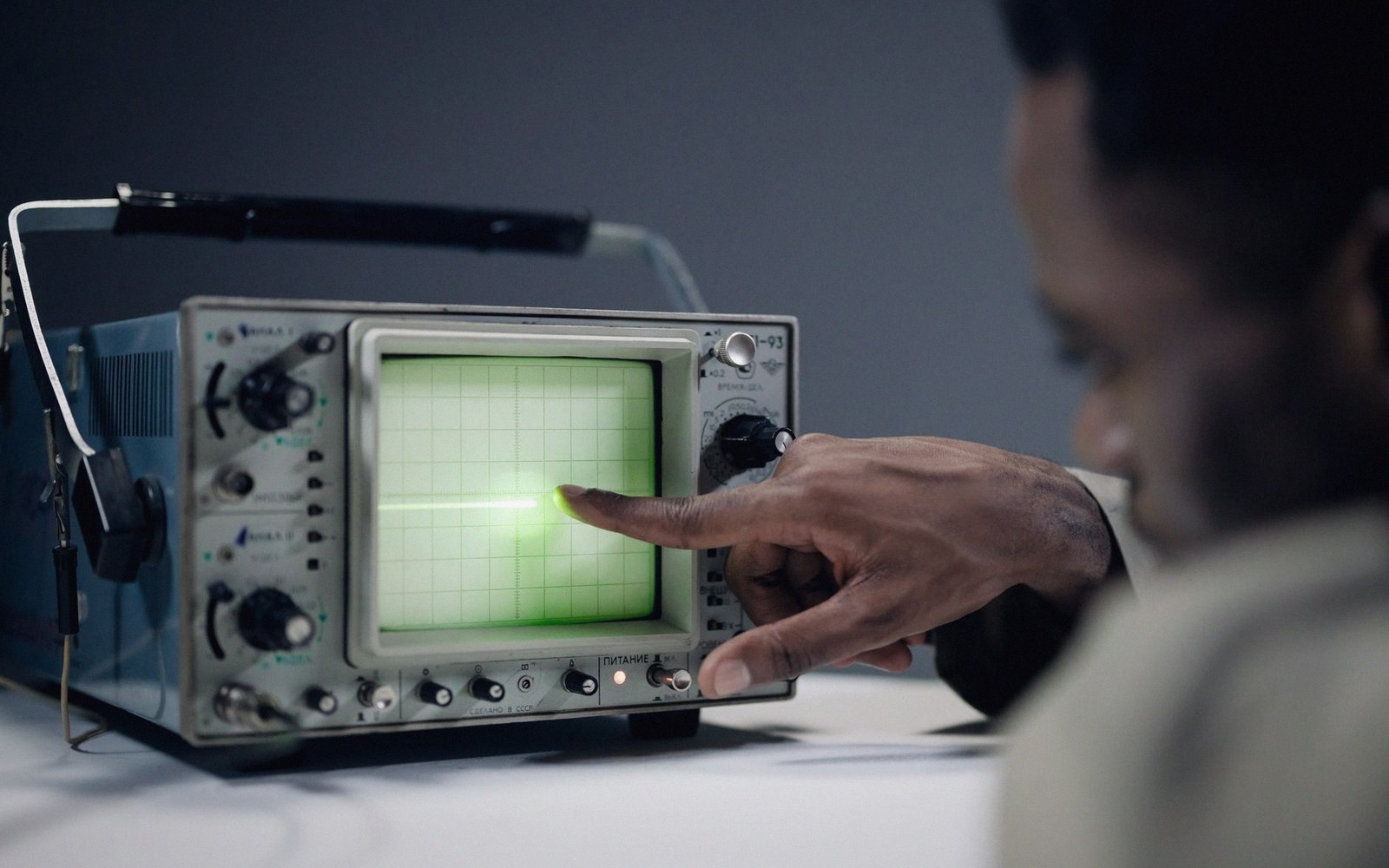
The pipeline has two modes, not one
Light is additive. Two surfaces receiving equal illumination are twice as bright as one — not one and a half times, not some gamma-bent curve of it. Rendering engines do their arithmetic in linear light, where the numbers behave the way physics expects: double the wattage, double the value. Every multiplication in a shader, every addition across light bounces, every blending of passes relies on that linearity holding.
Monitors do not work in linear light. Consumer displays apply a tone response — historically codified as gamma 2.2, the sRGB transfer function in its simplest form — that redistributes values so the perceptual midtones are neither crushed into shadow nor burned out at the top. That redistribution is necessary because the eye is not a linear meter either; we are far more sensitive to differences in dark values than bright ones. The transfer function maps a linear 0.5 (halfway to the emitter's maximum) to roughly 0.73 on screen, where the human perceptual midpoint actually lives.
The transform that converts from linear to display-ready is called, simply, the display transform. Apply it at the very last step, after all compositing arithmetic is done. Apply it earlier — say, to a texture before it enters the lighting calculation — and every multiplication in the engine now operates on perceptually-scaled data. Shadows fill in; speculars clip; the maths becomes quietly wrong in ways that are hard to diagnose because the image still looks approximately right.
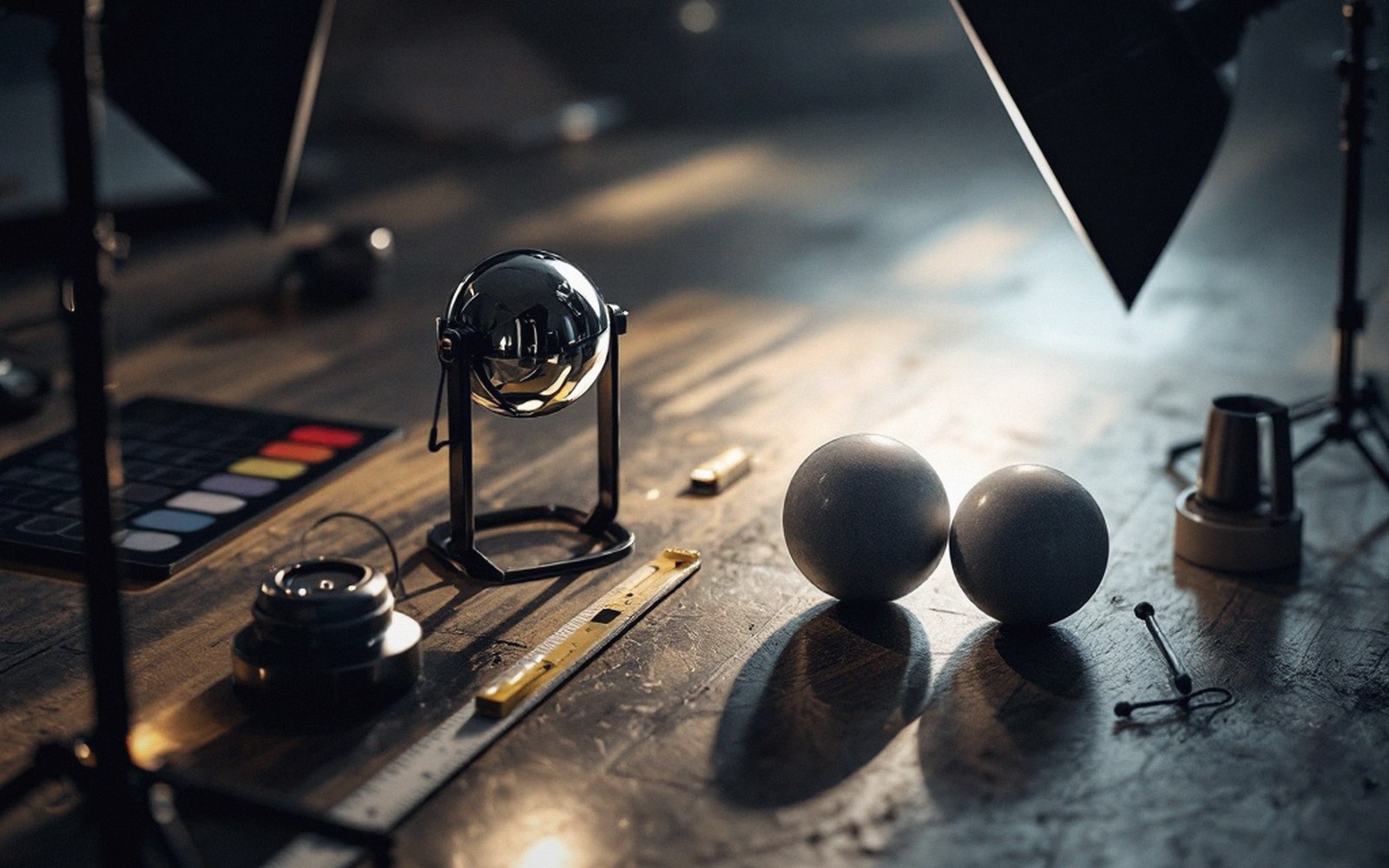
A practical rule follows directly: textures created from photographs must be linearised before the renderer sees them. sRGB images carry the display-gamma encoding baked in; a properly set-up pipeline strips it on import, does the work in linear, and reapplies the output transform on export. A colour-management system — OpenColorIO is the standard implementation in production pipelines — handles those transforms automatically when configured correctly, so the artist never touches a gamma slider by hand.
When a render looks dark and contrasty in the viewport but correct in a calibrated preview, that is almost always a missing display transform. When textures look oddly washed out in the 3D scene, the linearisation step was skipped. Both failures are diagnostic: the image is telling you exactly where in the pipeline the space was wrong.

More in Colour
Every entry in this section is listed on the Colour page, and all twenty-four sit in the full register.