Entry 11 · Reference Objects
The two balls
Bring both to the shoot. One records the light sources; the other records what light sources do.
- Entry
- 11
- Section
- 03 Reference Objects
- By
- Marek Sowa
- Read
- 3 min
What each one sees
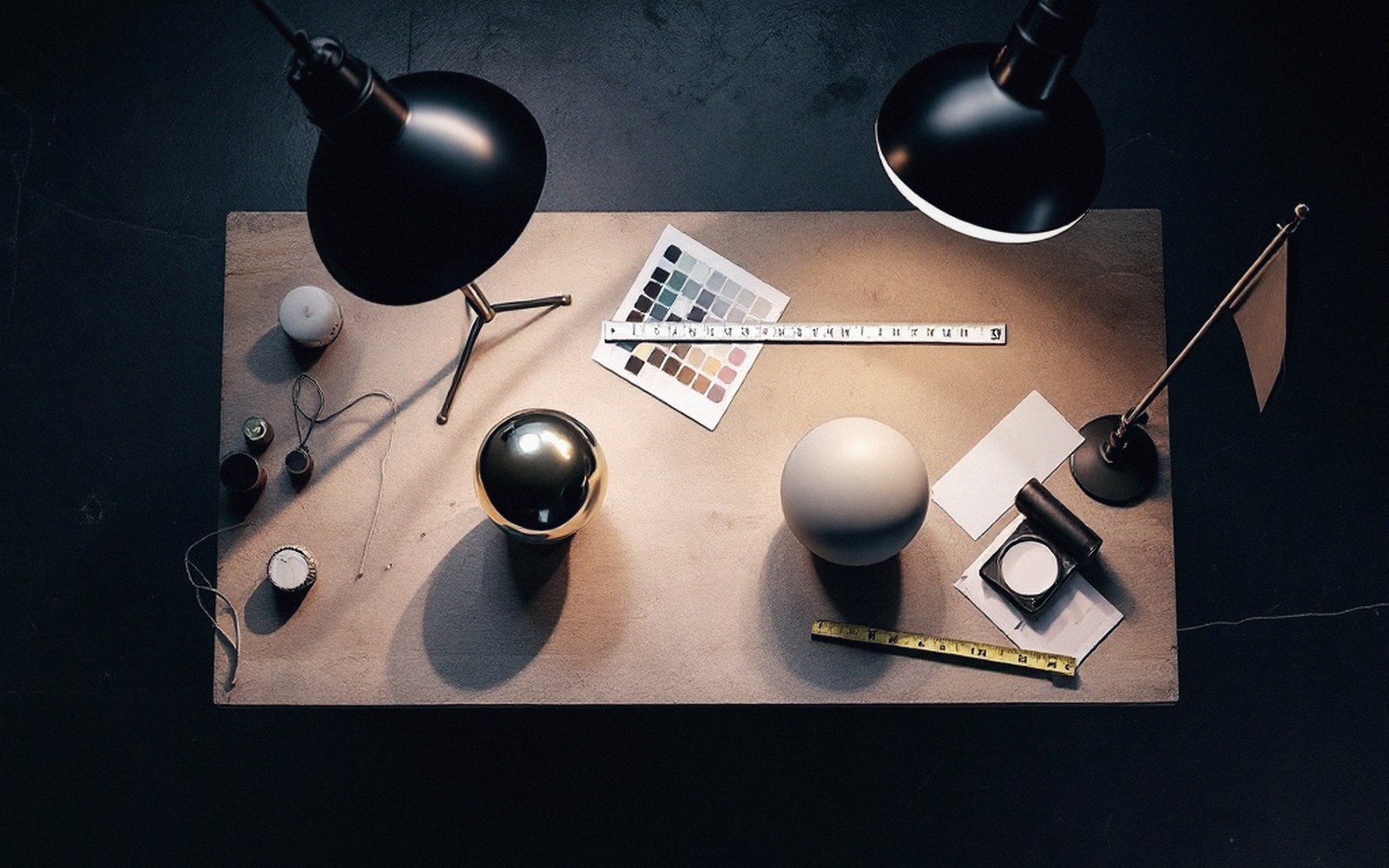
A chrome sphere is a mirror shaped into a globe. Every light on the set — every window, every lamp, every luminaire flagged off the talent — appears somewhere in its surface as a compressed, distorted hemisphere. The reflection wraps the full 360-degree environment into a single photograph, and that photograph, once HDR-bracketed, becomes the raw material for an image-based lighting setup. It tells you where the energy is coming from and roughly how much, even if the geometry of the room is too bent to read directly. The chrome ball is a record of the lighting environment as a luminance map.
A grey sphere does something quieter and more useful for a different question. Its surface is diffuse — typically an 18-percent-reflectance neutral grey — so it integrates the full incident illumination at that point in space and shows you the result spread across a curved matte surface. You can read the key light direction from the highlight position, judge the softness of that key from how hard the terminator falls, and see the fill-to-key ratio in the shadow side. Colour temperature announces itself immediately: a tungsten source on one side and a window on the other will divide the grey ball into a warm half and a cool half in a way that no flat grey card can show.
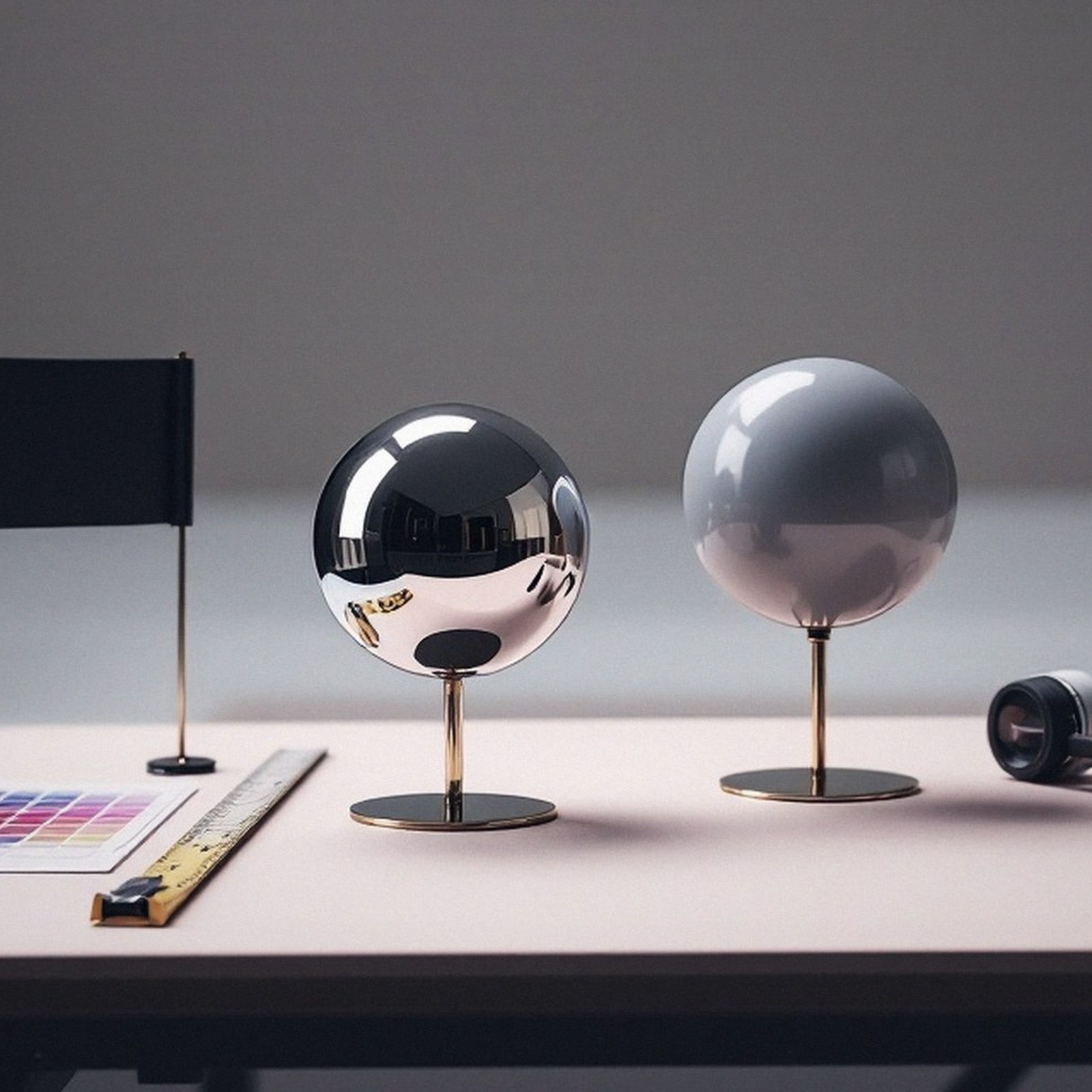
Together, the two balls answer two different questions about the same set. The chrome ball answers: what lights exist, and where are they? The grey ball answers: what does light do here, on an object that looks like most objects?
Why you need both
Neither ball alone is sufficient. The chrome sphere compresses the highlights so aggressively near the edges of the reflection that reading shadow-side fill is nearly impossible; the geometry of the distortion also makes it hard to judge the softness of a source. Conversely, the grey ball cannot tell you where a small, bright light sits in the overhead rig — its diffuse surface averages too much. A practical fixture at camera left and a large negative fill at camera right might produce identical shadow positions on the grey sphere while looking completely different in the chrome one.
In compositing, the chrome ball data drives the HDR environment used to light a CG object: the renderer samples the latitude-longitude map and sends energy from the real-world sources at the real-world angles. The grey ball acts as the ground truth check. Once a CG grey sphere is placed in the same virtual position and lit by the reconstructed environment, it should match the photographed grey ball within the tolerance of the white balance decision. If it does not, the discrepancy is measurable — not a matter of eye-balling the beauty render and hoping.
This is also why both balls must be photographed on the stage floor before anything moves. They record the lighting state, not the lighting intent, and set dressing shifts, practicals warm up, and the sun moves. A chrome ball photographed an hour after the plates were shot is a record of a different event.
Reading the pair together
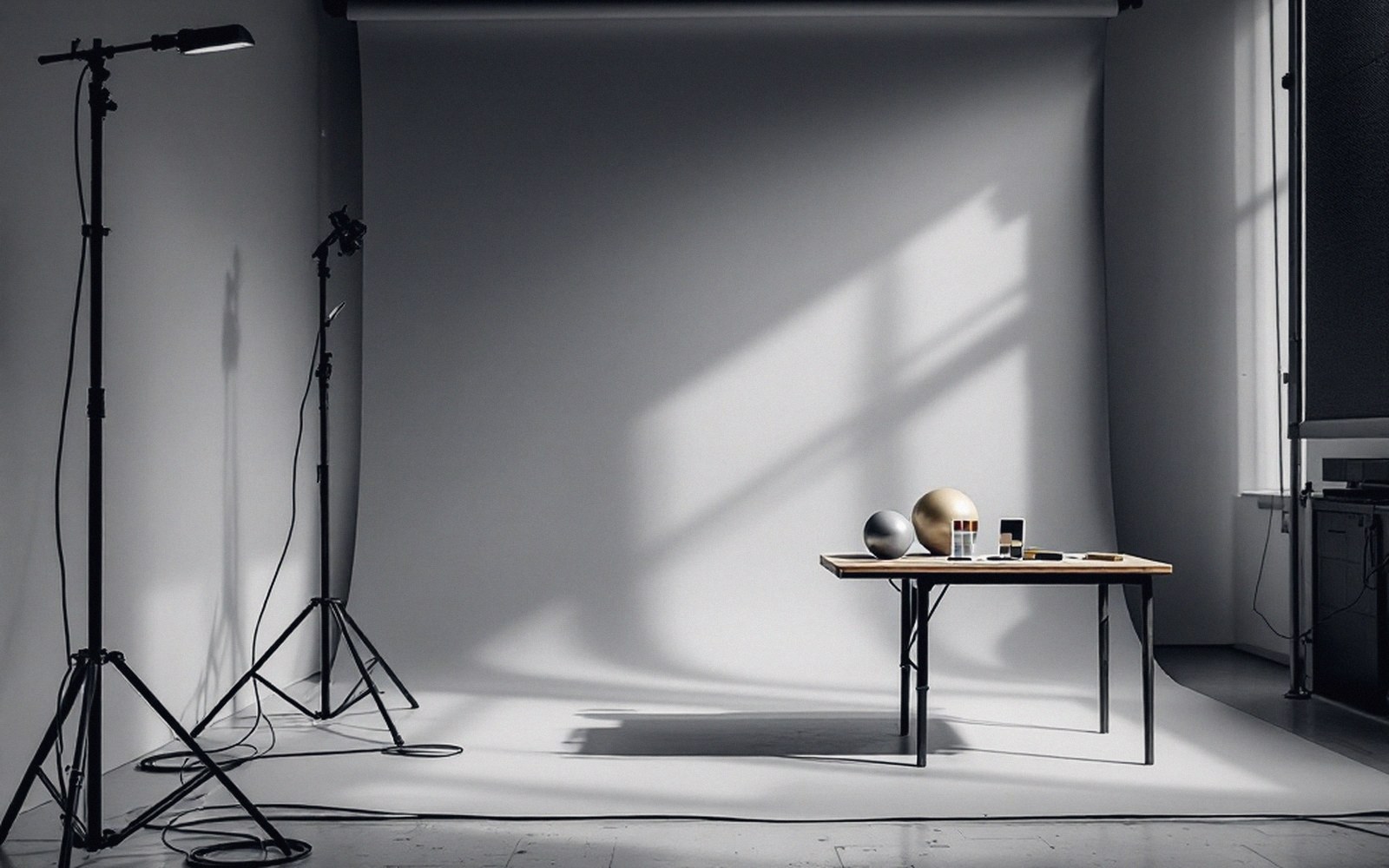
The practical workflow is to mount both spheres on a stand at approximately the same position and height as the element to be composited, hold a take with the scene fully lit, and bracket the exposure to retain detail in both the specular highlights on the chrome and the shadow side of the grey. The two balls share a frame or adjacent frames; they live in the same lighting moment.
When the composite goes wrong — when the CG object looks like it arrived from a different set — the grey ball is usually where the conversation starts. It is slower information, less glamorous than the mirror globe, but it carries the direction, softness and colour of the key in a form any eye can read. The chrome ball then confirms whether the problem is a missing source, a wrong intensity, or a misread white balance. Between them, they are the lighting documentation that makes a match possible rather than lucky.
More in Reference Objects
Every entry in this section is listed on the Reference Objects page, and all twenty-four sit in the full register.