Entry 12 · Reference Objects
The Chrome Ball
A 360-degree record of the stage in one photograph, distortion and all.
- Entry
- 12
- Section
- 03 Reference Objects
- By
- Clare Dunnet
- Read
- 2 min
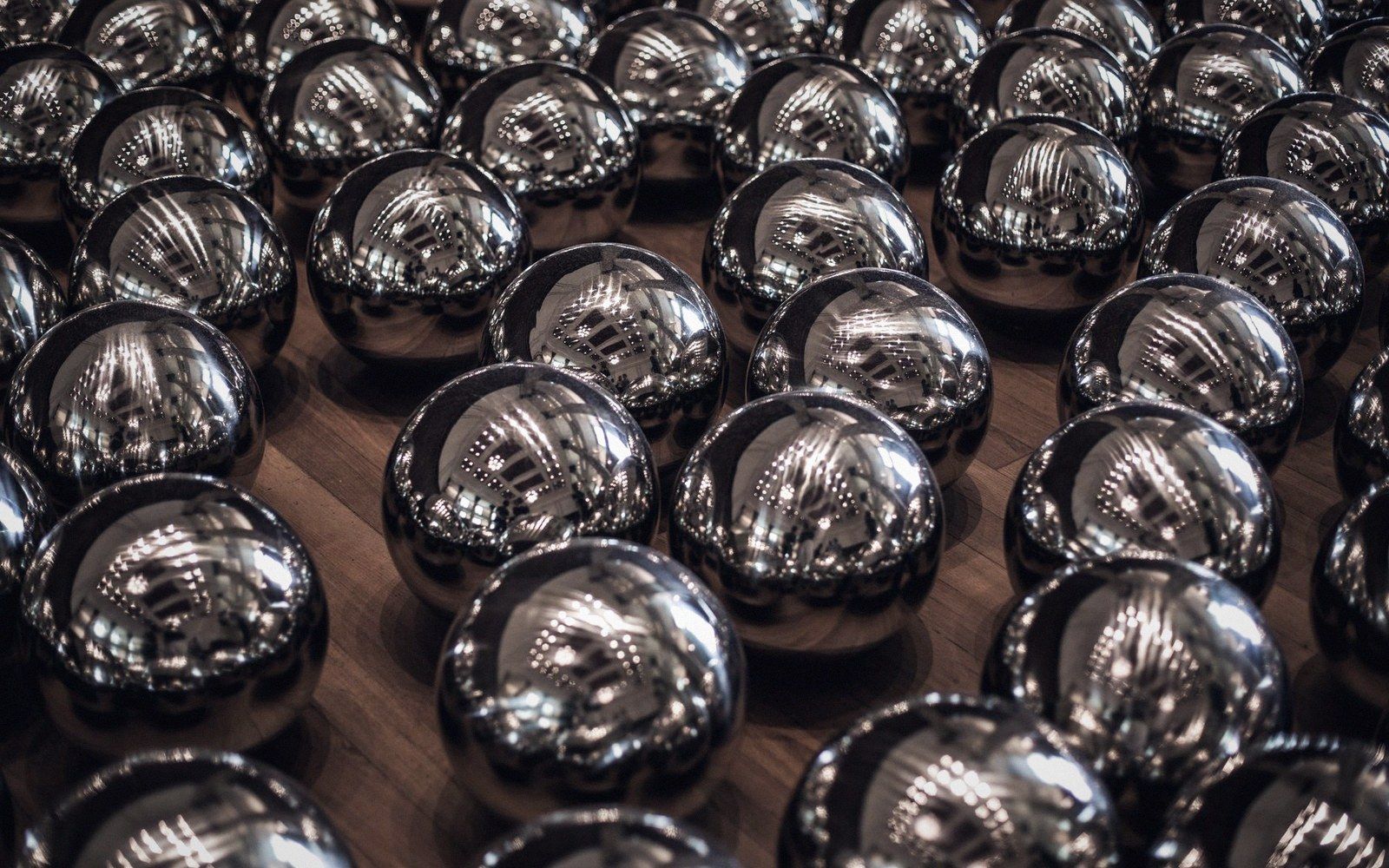
A 360-degree record of the stage in one photograph, distortion and all
A mirrored sphere placed on set reflects the entire visible hemisphere — ceiling, practicals, windows, every light source — compressed into a single object. Photograph it, and you have captured something a grey ball cannot: not merely the character of the illumination but its geography. Where every source sits, what it looks like, how hard or soft the transitions are.
The distortion is not a flaw to be corrected. A perfect mirror sphere maps the surrounding environment onto itself following a known, predictable projection — roughly equidistant — so a single photograph contains close to a full 180-degree view in every direction simultaneously. Shoot two exposures from opposite sides of the ball and you recover almost the entire sphere. Shoot the same position in a bracketed sequence for HDRI and you have a light probe suitable for image-based lighting: real angular data, real spectral content, real ratios between the key and the deepest shadow on the stage floor.
That last point is the one that makes the chrome ball irreplaceable rather than merely useful. The human eye normalises. A cinematographer standing on the stage knows roughly where the lights are; what they cannot hold in memory is the precise luminance ratio between the 6 kW HMI through the window and the 250 W practical on the desk. The mirrored sphere holds it exactly, provided the exposure sequence covers the full dynamic range of the scene.
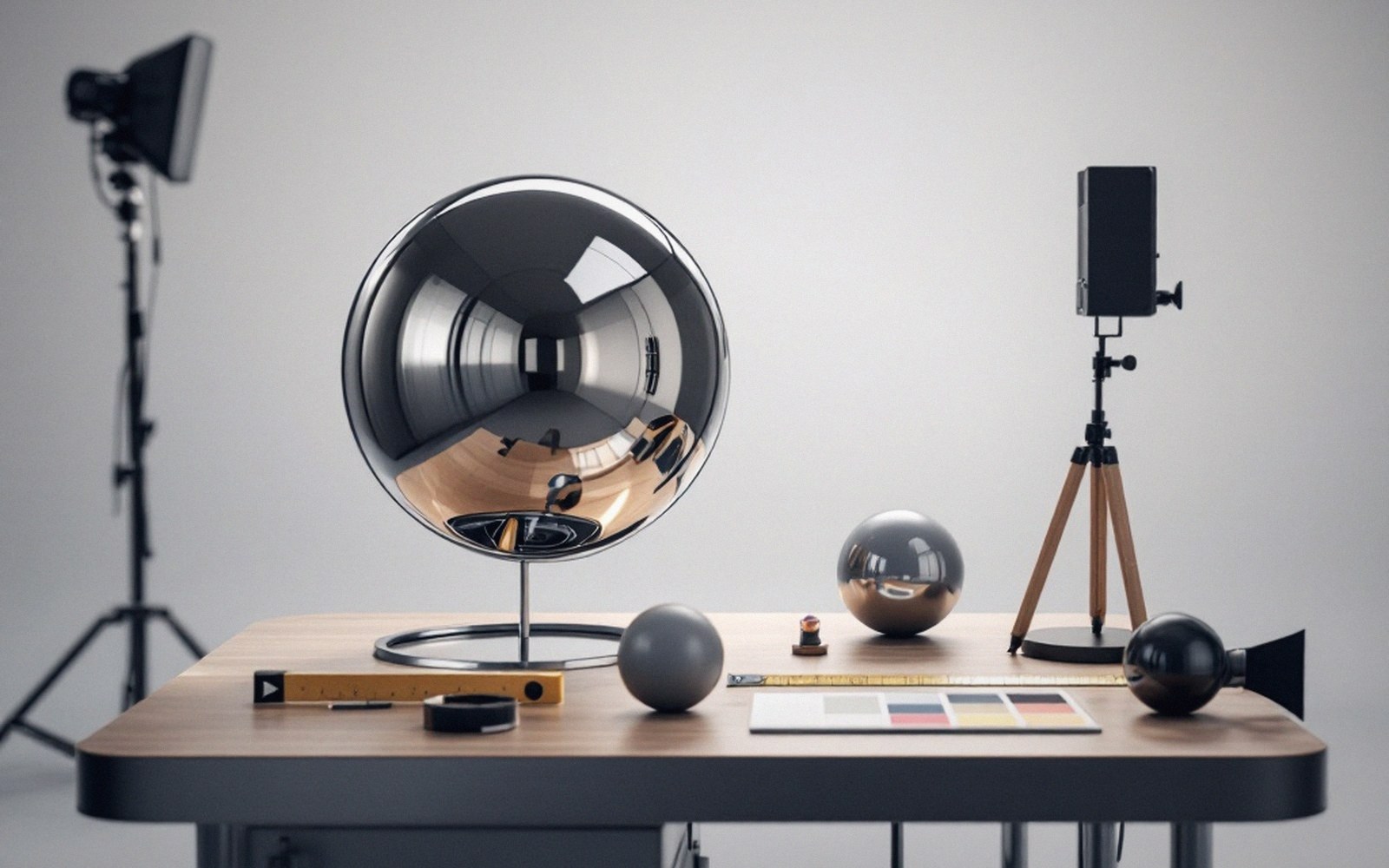
In practice the sphere is placed at the position the subject will occupy — actor's eyeline, object centre, whatever the relevant point is — and shot before the talent steps in. It is a simultaneous record made before the set changes. Any gross error in the VFX lighting rig will be visible immediately by comparison: a key arriving from the wrong side, a fill that is too cool, a bounce that does not exist.
The grey and chrome balls are usually photographed together. The grey ball reads the diffuse integration — the net light arriving from all directions as a single soft gradient — while the chrome ball resolves what is contributing to that integral and from where. Together they give the two things a compositor needs: the answer, and the working.
More in Reference Objects
Every entry in this section is listed on the Reference Objects page, and all twenty-four sit in the full register.