Entry 04 · Light Transport
Caustics
The concentrated light that follows a bent or reflected path — and why a forward path tracer almost never finds it.
- Entry
- 04
- Section
- 01 Light Transport
- By
- Clare Dunnet
- Read
- 2 min
Why the paths are so rare
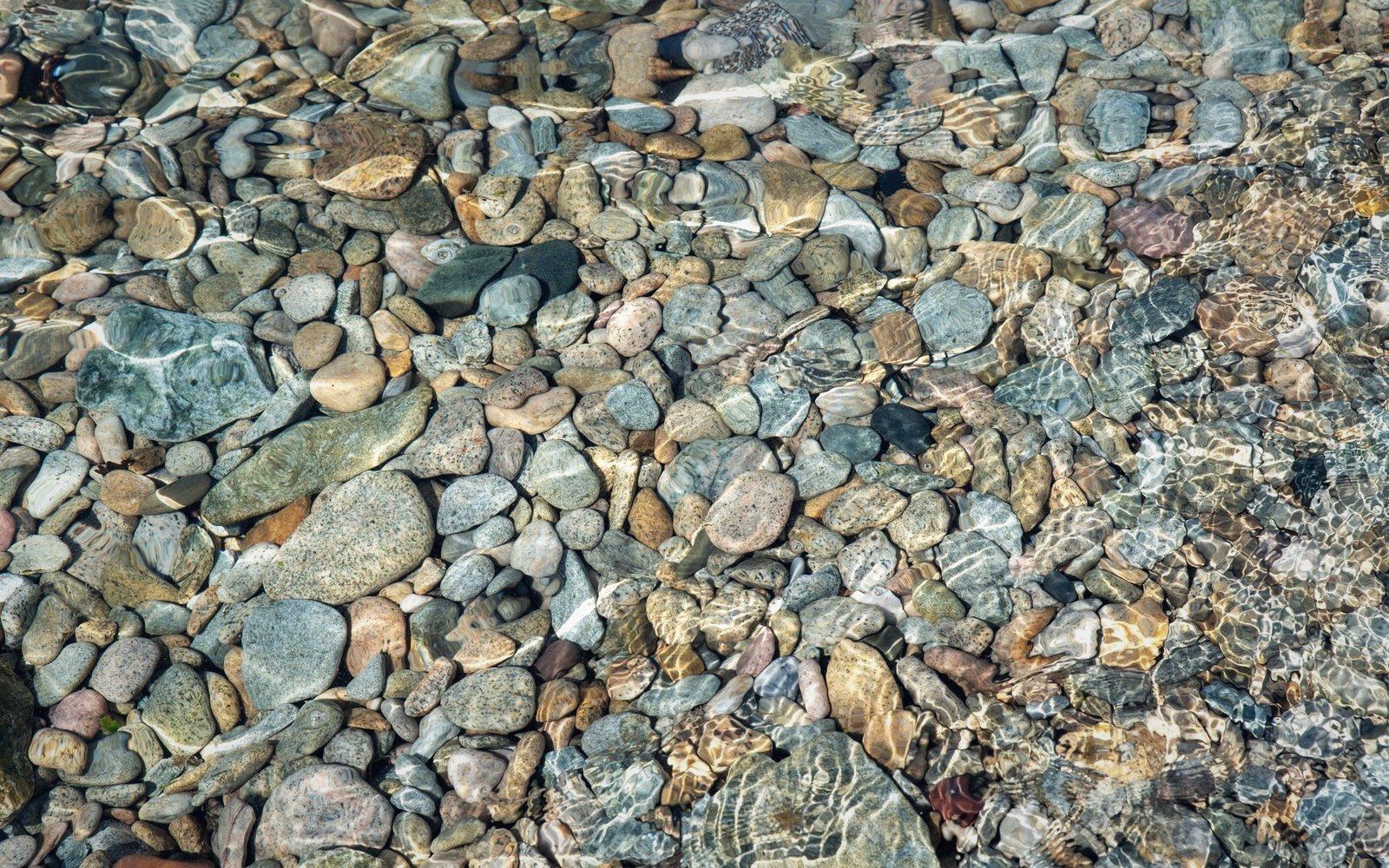
A caustic is the pattern of concentrated light that forms when rays converge after passing through or bouncing off a curved surface — the shifting net on a swimming-pool floor, the bright ring inside a wine glass, the hot spot thrown by a watch crystal. Physically, the light is real and often intense. Computationally, it is one of the hardest things a renderer has to find.
Standard path tracing works backwards: a ray leaves the camera, bounces around the scene, and eventually finds a light source or escapes. For a diffuse surface lit directly, this works efficiently. For a caustic, the path the ray needs to reconstruct is absurdly specific — it must leave the camera, land on the receiving surface, travel backwards through the focusing optic at exactly the right angle, and connect cleanly to the emitter. The solid angle subtended by that valid path is tiny. An ordinary path tracer samples directions statistically; almost every sample it fires at the glass or the chrome surface will trace a path that never connects to the light, contributing nothing but noise. The variance problem compounds quickly: many samples, each contributing nearly zero, with rare violent spikes when the path finally lands — those spikes read as fireflies.
Bidirectional path tracing helps by tracing paths from both the camera and the light simultaneously and connecting them in the middle, which makes the caustic subpath much easier to locate. Photon mapping is more direct still: fire photons from the light source forward into the scene, deposit them where they land, and query that deposit when a camera ray arrives nearby. Both approaches add cost and complexity, and neither is built into every production renderer's default mode.
In practice, caustics in finished frames are almost always faked. An extra card light, a gobo with a caustic pattern, a projected texture, a separate render pass added in composite — any of these is faster and more controllable than waiting for a Monte Carlo integrator to find the paths honestly. The result is plausible rather than physically accurate, which is usually enough.
When accuracy does matter — product shots of liquid in glass, architectural visualisation with water features, scientific illustration — photon mapping or dedicated caustic solvers are the correct tools. But they earn their place on the render farm only when the approximation visibly fails.
More in Light Transport
Every entry in this section is listed on the Light Transport page, and all twenty-four sit in the full register.